PAU KISAN MELA SERIES BEGINS WITH DYNAMIC FARMER-SCIENTIST INTERACTION AT KVK AMRITSAR
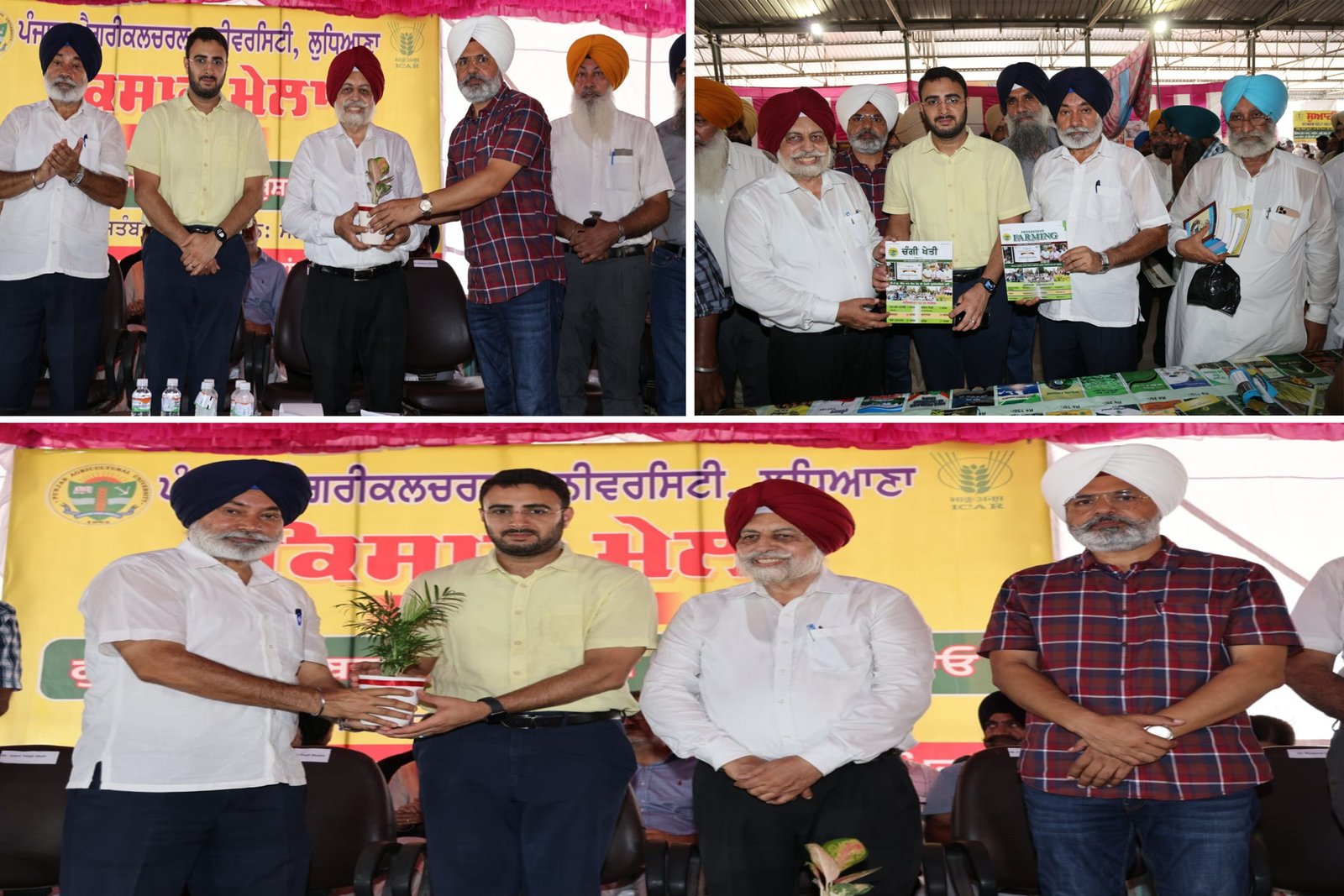
Amritsar September 3… (Amrik Singh)
The Punjab Agricultural University’s (PAU) Kisan Mela series commenced with an overwhelming response from farmers at the PAU- KVK Amritsar Kisan Mela, highlighting the strong engagement between the university and the farming community.
The Kisan Mela was officially inaugurated by Dr. S.S. Gosal, Hon’ble Vice Chancellor of PAU, who visited the agro-exhibitions and encouraged farmers to take a round of the demonstration plots. Dr. Gosal urged farmers to subscribe to PAU’s farm publications to stay informed about the latest university-recommended farm operations. He emphasized the importance of moving away from water-intensive crops that worsen the water crisis and harm soil health in Punjab, while also advocating for the conservation of paddy straw within the fields. Echoing the Commissioner’s remarks, Dr. Gosal highlighted the critical need to focus on processing and marketing in agriculture and also underscored the significance of adopting solar energy.He encouraged farmers to utilize PAU’s radio and TV programmes, as well as its social media platforms, to stay updated on the university’s recommendations. Dr. Gosal also urged participation in PAU’s weekly Facebook live programme and recommended subscribing to the digital newspaper Kheti Sandesh. He stressed the importance of exclusively relying on PAU-recommended farming techniques for better results.Dr. Gosal also spoke about the future of agriculture, encouraging farmers to engage their children in the field by enrolling them in PAU’s newly established agriculture colleges, so they can practice agriculture effectively rather than drift away from it.The Vice Chancellor officially released the new edition of the “Package of Practices for Rabi Crops” in both English and Punjabi, accompanied by dignitaries on stage.
During the event, Sh. Harpreet Singh, IAS, Commissioner of Municipal Corporation, Amritsar, and former BSF officer, encouraged farmers to adopt PAU-recommended crop varieties and technologies to enhance productivity and sustainability. He dispelled the common belief that Punjab farmers are solely focused on wheat and paddy, noting that their strong presence at the mela reflects their adaptive and progressive mindset. Sh. Harpreet Singh urged the expansion of the processing industry, emphasizing the need to bring processing machinery to the mela for demonstrations, including packaging and selling techniques. He highlighted that while all farmers in the Amritsar district cultivate vegetables, the potential for processing remains underutilized, which is crucial for the future of profitable farming. He stressed that forward-thinking research combined with innovative farmers will lead to a progressive Punjab. Additionally, he informed the audience about the upcoming government port in the area, which will have direct connectivity to Kandla port, facilitating the export of vegetables.
Dr. Ajmer Singh Dhatt, Director of Research at PAU, shared the latest advancements in research, including new crop varieties and production technologies aimed at improving agricultural practices. He introduced the nutritious ‘Punjab Chapati’ wheat variety and encouraged farmers to purchase its seeds, emphasizing its health benefits. He also highlighted PBW Biscuit 1 wheat, specifically developed to enhance biscuit quality, and mentioned PAU’s agreement with a renowned company for its commercial production.Dr. Dhatt also discussed hybrid varieties such as PHR 127 in Raya Sarson and a canola-quality hybrid in Gobhi Sarson. Additionally, he introduced the ‘Biomass Incorporator,’ a piece of farm machinery designed to improve soil health. He emphasized the importance of adopting water conservation technologies, the use of organic insecticides to control yellow rust and other pathogens, and the need to preserve paddy stubble in the field, which enriches the soil, reduces fertilizer requirements, and increases crop yield. He reminded farmers that “stubble is gold” and encouraged them to utilize machinery for stubble management.Dr. Dhatt urged farmers to share their challenges, as this feedback is crucial for refining research efforts. He also advised them to take home vegetable and pulse seed kits available at the mela and emphasized the importance of water conservation both at home and in the fields.
Earlier, Dr. Makhan Singh Bhullar, Director of Extension Education, PAU, in his welcome remarks, emphasized PAU’s commitment to developing crop varieties and technologies that enhance agricultural productivity, laying stress on farmer feedback. He highlighted the university’s focus on helping farmers go towards self marketing and primary processing of produce to promote more profits and advancing skill development to empower the rural community and youth. He congratulated the KVK scientists for successful organisation of the event inspite of incessant rain in the region. He expressed gratitude to the Vice Chancellor for his leadership, helping university secure top position in the NIRF rankings for the second time in row.
Dr. T.S. Riar, Additional Director of Communication, coordinated the event and highlighted the university’s efforts to disseminate crucial information through various media platforms. He drew attention towards mela theme of saving natural resources to ensure a healthy happy life for all, urging farmers to connect with Pau publications for safe and progressive farming. Dr Riar disclosed the government scheme awarding monetary help to students with innovative ideas for starting their own business.
Subject Matter Specialists from PAU provided an overview of the latest research and extension activities, followed by an interactive Question-Answer session, allowing farmers to engage directly with experts and seek guidance on various agricultural issues. Farmers eagerly explored the latest advancements in crop varieties and agricultural technologies showcased by various PAU departments at the exhibition.
The event also honoured several outstanding farmers for their exemplary contributions to agricultural diversification: Avtar Singh for large-scale vermicompost production, Navpreet Kaur for bakery products, Pargat Singh for dairy farming, Sukhbir Singh for poultry farming, Nitish Machal for goat farming, Harpal Singh for pig farming, Diljeet Singh for vegetable cultivation, Virsa Singh for mushroom farming, Ramandeep Singh for adopting the Direct Seeded Rice (DSR) technique, and Surinder Singh Randhawa for rajmash cultivation.
The mela concluded with a vote of thanks from Dr. Bikramjit Singh, Associate Director (T), KVK, Amritsar