FSSAI Notice Regarding A2 Milk product Labeling
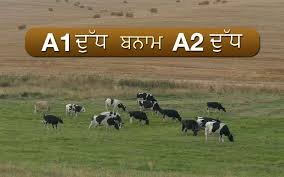
Ludhiana 27 August 2024 (Amrik Singh)
A notice from the Food Safety and Standards Authority of India (FSSAI) regarding the
labeling of milk products as A1 or A2 created confusion among the producers and the public.
According to FSSAI guidelines, milk and milk products should not be labelled as A1 or A2.
Dr Inderjeet Singh, Vice Chancellor, Guru Angad Dev Veterinary and Animal Sciences
University, Ludhiana informed that A2 milk refers to milk that contains only the A2 type of
beta-casein protein, which is found predominantly in indigenous zebu cows, buffaloes, and
goats. Historically, most animals produced A2 milk until a genetic mutation occurred in some
European breeds, leading to the production of A1 beta-casein in addition to A2. This change
resulted in two distinct types of milk: A1 and A2. Indigenous Indian breeds, such as Sahiwal,
Gir and Red Sindhi as well as buffalo and goat naturally produce A2 milk. Dr Singh said that
recognizing this, the dairy genetics companies across the globe have been actively promoting
the use of A2 bulls and encouraging breeding policies to increase the population of A2 bulls
and resultant progeny for producing A2 milk. Frozen Semen producing companies include
details of the A2 casein gene to characterize their bulls and thus their greater acceptability
even though the relative advantage of the two types of beta casein on human health remain
unsubstantiated.
Dr Singh said that although A1 milk has been shown to have opioid-type metabolism,
however, its ill effects in populations consuming predominantly A1 type of milk have not
been established. Despite this, consumer preference has shifted towards A2 milk due to
perceived and publicised health benefits. In line with public demand, it is crucial that milk
and milk products are truthfully labeled as A2 only if they are genuinely derived from A2
milk. However, ghee that is fat and doesn’t contain any proteins, can not be labeled as A2
ghee. Considering the preference of the consumers and some Ayurvedic prescriptions
demand that the consumer should be informed about the type of milk from which the ghee is
prepared.
Dr R S Sethi, Dean, College of Dairy and Food Science Technology said that the
FSSAI issued guidelines recently were overly generalized, leading to their withdrawal the
very next day. Despite being informed of this, a section of the press published news items
regarding vet varsity’s Sahiwal ghee. Dr Sethi informed that this product is accurately labeled
as being prepared from the A2 milk of Sahiwal cows, providing correct and transparent
information to consumers. He said that the public is advised to rely on accurate and verified
information when choosing dairy products and to be cautious of misleading labels.